Master Thesis
An examination of gender stereotypes in digital personal assistants: How can DPA's be rethought through a feminist workshop?


The purpose of my master was to examine how traditional western stereotypes are used in the development of digital personal assistants (DPA) such as Siri, Alexa and Google Home.
Topic of interest
For my analysis I held a feminist workshop with the goal of exploring if the participants (who defines themselves as feminists) could create DPA's that did not include gender stereotypes by using a feministic framework.
Workshop Objective and Purpose
The primary goal of the workshop was to foster a critical discussion and practical exploration of how individuals who identify as feminists can use feminist principles to create Digital Personal Assistants (DPAs) that are free from gender stereotypes.
The aim was not only to raise awareness about stereotypes in technology but also to empower participants to actively contribute to more inclusive and equitable technology development.
Worked with the definition of feminisme as:
"The belief in social, economic and political equality of the sexes"
Introduction: I began with an introduction to set the tone for the workshop, explaining its purpose and relevance in today's technology-driven world.
Post workshop follow-up
I maintained open communication with the participants after the workshop, encouraging them to continue exploring and applying feminist principles in their work and to keep a critical mindset towards the technology they use.
In conclusion, planning and conducting a feminist workshop aimed at challenging gender stereotypes in DPA design involved careful preparation, thoughtful structuring, and a commitment to fostering meaningful discussion and action.
The workshop provided a platform for participants to not only recognize the issues at hand but also actively contribute to the creation of technology that is more inclusive and equitable.
Presentation and Discussion: I presented key concepts related to feminism, gender stereotypes in technology, and the potential for feminist frameworks to reshape DPA development.
This was followed by open discussions to encourage active participation and the sharing of perspectives.
Group Activities: To promote hands-on learning and collaboration, I organized group activities.
They were encouraged to draw upon feminist theories and concepts to guide their discussions.
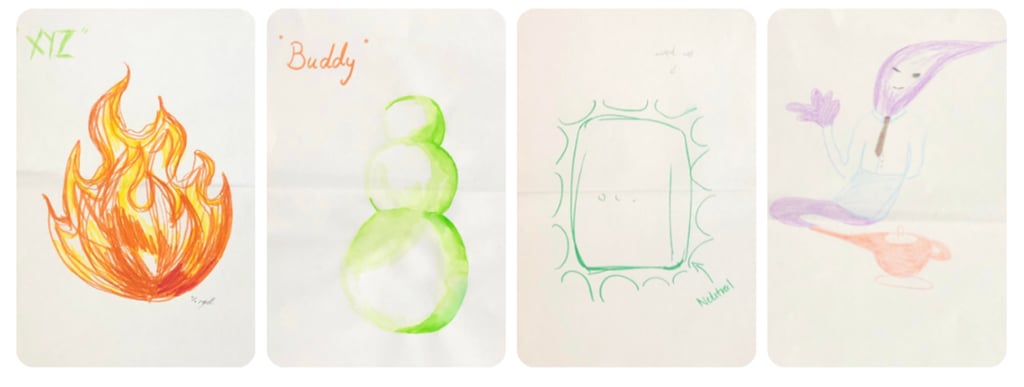
Here they also needed to draw illustrations of their DPA in order to be confronted with de difficulties of avoiding gender seterotypes in the creation of technology.
Feedback and Reflection: After the group activities, we shared the results of each group's discussions.
This allowed participants to gain insights from one another and reflect on the challenges and opportunities associated with designing gender-neutral DPAs.
Structure of the workshop